Summary
In January 2006, a resident of Ruskin, Florida, which is just south of Tampa, found partial human skeletal remains belonging to an unidentified individual in their yard. The remains were brought into the person's yard by their dog. The Hillsborough County Sheriff's Office responded and began collecting evidence and investigating. Nearly three years later, in November 2008, the dog led its owner to a dilapidated tent in the woods where more human remains were found. Forensic anthropologists determined the remains found in the tent belonged to the same person whose remains were found in the yard. The individual was determined to be White man, who was 30 to 50 years old, and likely about 6 feet tall. 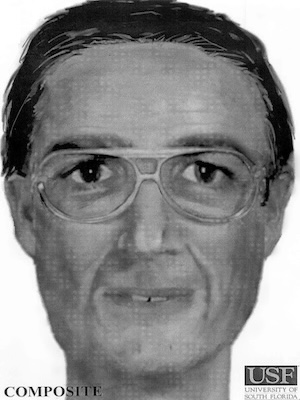
Despite a years-long investigation, including the development and release of several forensic sketches depicting the man's likeness, he could not be identified and he became known as Hillsborough County John Doe (2006). Details of the case were entered into the National Missing and Unidentified Persons System (NamUs) as UP0052.
In 2024, the Hillsborough County Sheriff's Office submitted forensic evidence to Othram in The Woodlands, Texas where scientists determined that despite the challenging nature of the evidence, advanced DNA testing could help identify the John Doe. At Othram, scientists successfully developed a DNA extract from the provided evidence and used Forensic-Grade Genome Sequencing® to build a comprehensive DNA profile for the man. Othram's in-house forensic genetic genealogy team then worked to develop new investigative leads that were returned to law enforcement.
Using this new information, a follow-up investigation was conducted leading investigators to potential relatives of the man. Reference DNA samples were collected from a relative and compared to the forensic DNA profile developed by Othram using KinSNP® Rapid Relationship Testing. This investigation led to the positive identification of the man, who is now known to be Edward Russ Green, born September 25, 1953.
 We were able to give Mr. Green his name back and provide long-awaited answers to his loved ones.
"For nearly two decades, this man's identity was unknown," said Sheriff Chad Chronister. "I'm incredibly proud of our Cold Case Unit and our partners at Othram for proving that time does not erase our commitment to the truth. We were able to give Mr. Green his name back and provide long-awaited answers to his loved ones."
Individuals who have taken a consumer DNA test can aid ongoing forensic investigations by joining the DNASolves® database. Expanding the number of available DNA profiles increases the likelihood of successful identifications, helping to reunite families with their missing loved ones and resolve cases that have remained unsolved for years.
The identification of Edward Green represents the 48th case in the State of Florida where officials have publicly identified an individual using technology developed by Othram. Visit DNASolves® to learn about other Florida cases where your support can help bring long-awaited answers to families.
Dan Miller
Director of Customer Service
Dan guides law enforcement agencies across the United States and internationally through every step of the forensic process—from crime scene to courtroom. He ensures investigators have the support and resources they need to navigate advanced DNA testing and maximize the impact of forensic evidence in their cases.