Summary
On August 11, 1996, the skull of an unidentified individual was found about 100 feet down a steep embankment in Arcata, California. The Arcata Police Department and Humboldt County Coroner’s Office responded to the scene, with the Coroner's office taking possession of the remains. It was determined that the remains belonged to an adult white man.
A DNA sample was obtained from the remains; however, it was determined to be degraded due to exposure to the elements and only a partial STR profile could be developed. The partial STR profile was entered into both the California Missing Persons DNA Database and the National Unidentified Persons DNA Index. It was also compared against profiles from missing persons and other human remains in the Combined DNA Index System (CODIS). These database searches did not yield a match to a known individual.
Despite a thorough investigation, the man could not be identified and became known as Arcata John Doe (1996). Details of the case were entered into the National Missing and Unidentified Persons System (NamUs) as UP102333.
With funding provided through Representative Jared Huffman’s Community Funding Grant for the clearance of unidentified human remains cases, the Humboldt County Sheriff’s Office (HCSO) and the California Department of Justice (CA DOJ) worked to submit evidence to Othram. In May 2025, DNA extracted from the remains was sent to Othram’s laboratory in The Woodlands, Texas where scientists determined that advanced DNA testing could help to infer the man's identity. Othram scientists used Forensic-Grade Genome Sequencing® to build a comprehensive DNA profile for the unknown man. Othram’s in-house forensic genetic genealogy team then used this profile to conduct genetic genealogy research and generate new investigative leads in the case.
In December 2025, Othram returned investigative leads to the HCSO indicating that the DNA profile may belong to Gregory Hugh Oliver, who had been reported missing to the Palm Beach County Sheriff’s Office in Florida. The report also identified several potential genetic relatives of Oliver. HCSO investigators located a DNA sample from Oliver’s mother, which was submitted to the CA DOJ for comparison to the unidentified remains. This comparison has now identified Arcata John Doe as Gregory Oliver. Oliver was last seen by family in 1983.
Using this new information, a follow-up investigation was conducted leading investigators to potential relatives of the man. Reference DNA samples were collected from a relative and compared to the DNA profile of the unidentified man. This investigation led to the positive identification of the man, who is now known to be Gregory Hugh Oliver.
Gregory Hugh Oliver, who was last seen by family in 1983, was reported missing to the Palm Beach County Sheriff’s Office in Florida.
Individuals who have taken a consumer DNA test can aid ongoing forensic investigations by joining the DNASolves database. Expanding the pool of available DNA data increases the likelihood of successful identifications, helping to reunite families with their missing loved ones and resolve cases that have remained unsolved for years.
This is the 80th publicly announced case in the State of California where officials leveraged Othram’s identity inference pipeline. Explore other cases on Othram’s website.
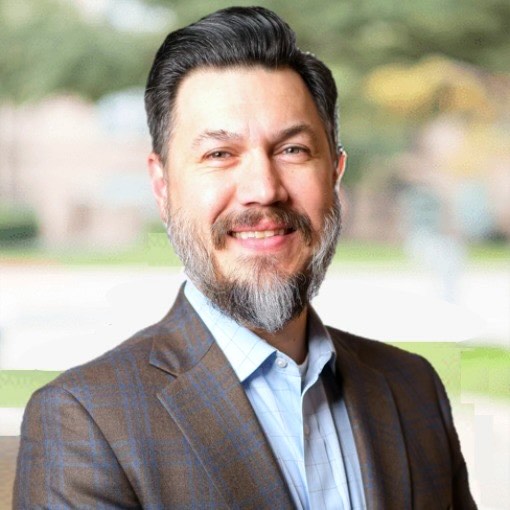
Dan Miller
Director of Customer Service
Dan guides law enforcement agencies across the United States and internationally through every step of the forensic process—from crime scene to courtroom. He ensures investigators have the support and resources they need to navigate advanced DNA testing and maximize the impact of forensic evidence in their cases.