Summary
In March of 1980, the skeletal remains of an unidentified individual were found in Robeson County, North Carolina. The remains were found in a wooded area off of US-301, four miles north of Rowland in southern North Carolina. The Robeson County Sheriff's Office responded and began collecting evidence and investigating. They determined the remains were an adult White man with brown hair, likely between 23 and 35 years old who stood about 5'5" tall. He was found with a white turtleneck shirt (size 18, chest 34), cotton undershirt (size 38-40), one navy blue T-shirt (size 18, chest 34), pair of blue jeans (W30 X L32), small size underwear, one pair of white thermal underwear (size 34-36) and a white handkerchief. 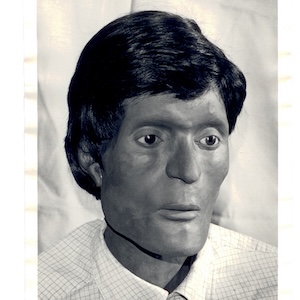
Despite a lengthy investigation that included releasing a composite sketch of what the man likely looked like when he was alive, he could not be identified and became known as Robeson County Doe. Details of the case were entered into the National Missing and Unidentified Persons System (NamUs) as UP2179.
In 2024, the North Carolina Office of the Chief Medical Examiner submitted forensic evidence to Othram in The Woodlands, Texas to determine if advanced DNA testing could help identify the man. Othram scientists successfully developed a DNA extract from the provided evidence and then used Forensic-Grade Genome Sequencing® to build a comprehensive DNA profile for the man. Othram's in-house forensic genetic genealogy team used the profile in a genetic genealogy search to develop new investigative leads that were returned to law enforcement.
Using this new information, a follow-up investigation was conducted leading investigators to potential relatives of the man. Reference DNA samples were collected from a relative and compared to the DNA profile of the unidentified man. This investigation led to the positive identification of the man, who is now known to be Joseph Callahan, born on March 18, 1959.
Joseph Callahan, then 20, was last seen leaving Ridley Park, near his home in Philadelphia, Pennsylvania, in the fall of 1979. He was a 1977 graduate of Ridley High School.
Funding for the advanced DNA testing and forensic genetic genealogy used in this case was provided by NamUs, a national clearinghouse that assists the criminal justice community with the investigation and resolution of missing, unidentified, and unclaimed persons cases across the United States and its territories. NamUs is funded and administered by the National Institute of Justice (NIJ) and is managed through a contract with Research Triangle Institute International. We are grateful for the support of RTI, NamUs, and the NIJ.
This is the 16th publicly announced case in the State of North Carolina where officials leveraged Othram’s identity inference pipeline. Explore other cases on Othram’s website.
Dan Miller
Director of Customer Service
Dan guides law enforcement agencies across the United States and internationally through every step of the forensic process—from crime scene to courtroom. He ensures investigators have the support and resources they need to navigate advanced DNA testing and maximize the impact of forensic evidence in their cases.