Summary
In July 1997, Toronto Police were called to the Driftwood Avenue apartment of 41-year-old healthcare worker Gracelynn Greenidge (née Braithwaite), originally from Barbados, after she failed to report for work. A concerned coworker visited Greenidge's home, looked through a peephole, and saw Greenidge’s body on the floor. Police were alerted and once on the scene, officers entered the apartment and found Greenidge dead from fatal stab wounds. Evidence of a violent struggle was documented, and multiple swabs were collected, but initial forensic testing in the first few years after the crime, did not yield DNA profiles. With no suspect identified, the case eventually went cold.
In 2017, an STR DNA profile belonging to an unknown male was developed from a swab taken from a table leg at the scene. Although the profile did not match a known person, it matched DNA from two other Toronto-area murders: the 1982 murder of 25-year-old Christine Prince and the 1983 murder of 23-year-old Claire Samson, who went by “KC” or “Casey.” Prince was last seen on June 21, 1982 on a streetcar, and her body was found the next day near the Rouge River. Samson was last seen getting into a beige vehicle driven by an older white male with gray or thinning hair; she was found on September 2, 1983 in a wooded area in Oro-Medonte Township, shot twice in the head with a .22 caliber firearm.
Although all three murders were thoroughly investigated, the identity of the suspect remained unknown. The Toronto Police Service Homicide and Missing Persons Unit, Cold Case Section, continued to pursue these cases. In 2022, investigators submitted forensic evidence from the murder of Gracelynn Greenidge to Othram in The Woodlands, Texas. DNA recovered from the evidence represented a complex mixture, making it difficult to use in a traditional forensic genetic genealogy search. To address this challenge, Othram scientists used Forensic-Grade Genome Sequencing® to develop a comprehensive DNA profile and leveraged the Othram Multi-Dimensional Forensic Intelligence (MDFI) platform to perform a forensic search suited for complex DNA mixtures. The resulting DNA profile was provided to the Toronto Police Service forensic genetic genealogy team, which conducted a forensic genetic genealogy investigation, generated investigative leads, and returned those leads to investigators for follow-up.
This follow-up investigation ultimately led to the identification of Kenneth Smith as the suspect. Smith died in Windsor, Ontario, in 2019 at the age of 72. He lived and worked in and around Toronto during the period of the murders and was previously known to police. Although Smith had a history of sexual assaults, he had not been identified as a suspect in these cases. If Smith were still alive, he would have faced three counts of murder. Investigators continue to review his past to determine whether additional victims may exist, and the Toronto Police Service encourages anyone with information related to Smith to contact police.
This case highlights the value of preserved evidence, the importance of collaboration, and the impact of advanced DNA technology. If you would like to support efforts to solve more cases like this, consider contributing your DNA data to the DNASolves database which aids law enforcement in identifying suspects and giving families the answers they deserve.
The identification of Kenneth Smith is the 21st publicly announced case in Ontario solved using technology developed by Othram. More information on Ontario cases can be found at DNASolves.
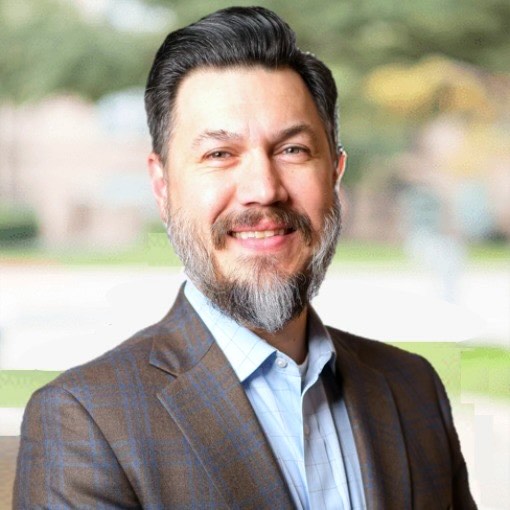
Dan Miller
Director of Customer Service
Dan guides law enforcement agencies across the United States and internationally through every step of the forensic process—from crime scene to courtroom. He ensures investigators have the support and resources they need to navigate advanced DNA testing and maximize the impact of forensic evidence in their cases.