Summary
In January 1990, the skeletal remains of an unidentified individual were found in a wooded area in the Little Talbot Island State Park near the Duval and Nassau county lines in Jacksonville, Florida. Investigators determined that the remains were that of a White man who was at least 6'3" tall with extensive dental work. The man was found fully clothed, sitting against a tree. Several items were recovered alongside the man, including keys to a GM vehicle, an ink pen, sunglasses, a black pipe, a plastic comb, and super glue. Officials estimate he died three to six months prior.
Despite a lengthy investigation, including releasing a forensic sketch depicting his likeness when he was alive, the man could not be identified and became known as Jacksonville John Doe (1990). Details of the case were entered into the National Missing and Unidentified Persons System (NamUs) as UP16757. 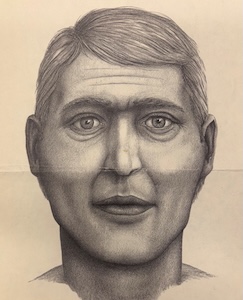
In 2024, investigators teamed with Othram to leverage identity inference, a process that enables investigators to identify individuals from DNA evidence, even when there is no known reference sample to initially compare against. Officials with the Jacksonville Sheriff's Office, the Florida Department of Law Enforcement, and Districts 9 and 25 Medical Examiner's Office worked together to submit forensic evidence to Othram's laboratory headquartered in The Woodlands, Texas.
At Othram, scientists reviewed details of the case, determining that advanced DNA testing could help to identify the man. Othram scientists worked to develop a DNA extract from the provided forensic evidence, using Forensic-Grade Genome Sequencing® to build a comprehensive SNP profile for the man. This SNP profile powered a forensic search led by Othram's and FDLE's forensic genetic genealogy teams, resulting in new investigative leads about the man's identity.
Using this new information, a follow-up investigation was conducted leading investigators to potential relatives of the man. Reference DNA samples were collected from a relative and compared to the DNA profile of the unidentified man. This investigation led to the positive identification of the man, who is now known to be Joseph Paul Connors, who went by "Buddy." According to the Jacksonville Sheriff's Office, he was born in May of 1937. When his body was found in 1990, he was 52 years old. It is unclear exactly when he died, but authorities do not suspect foul play.
FDLE, which accepted the case in its Missing and Unidentified Human Remains Program, facilitated the advanced DNA testing and forensic genetic genealogy in this case, using Federal BJA MUHR grant funds.
Individuals who have taken a consumer DNA test can aid ongoing forensic investigations by joining the DNASolves database. Expanding the pool of available DNA data increases the likelihood of successful identifications, helping to reunite families with their missing loved ones and resolve cases that have remained unsolved for years.
This is the 56th publicly announced case in the State of Florida where officials leveraged Othram’s identity inference pipeline. Explore other cases on Othram’s website.

Dan Miller
Director of Customer Service
Dan guides law enforcement agencies across the United States and internationally through every step of the forensic process—from crime scene to courtroom. He ensures investigators have the support and resources they need to navigate advanced DNA testing and maximize the impact of forensic evidence in their cases.