Summary
On October 20, 1990, a crew collecting garbage and debris along the Sacramento River discovered partial skeletal remains on a small island in the middle of the river near Redding, California. Additional remains and a duffel bag were found across from the island on the riverbank. The remains were not recognizable and consisted of partial skeletal parts only.
Authorities determined that the remains belonged to an adult male, estimated to have been between 18 and 26 years of age at the time of death, with an estimated year of birth between 1962 and 1972. The man's height was estimated at between 62 and 64 inches, though this estimate was noted as uncertain given the condition of the remains. The man's ancestry was assessed as Hispanic/Latino or American Indian/Alaska Native. Details of the case were entered into the National Missing and Unidentified Persons System (NamUs) as UP80853.
In January 2025, Shasta County Coroners Office submitted evidence to Othram's lab in The Woodlands, Texas. At Othram, scientists performed DNA extraction and used Forensic-Grade Genome Sequencing® (FGGS™) to develop a comprehensive DNA profile for the unidentified man. Othram's forensic genetic genealogy team then conducted a forensic genetic genealogy search using the resulting DNA profile. The investigation generated leads that were returned to law enforcement.
In the course of the investigation, law enforcement received a tip from a woman who recognized shoes listed in a photograph in the NamUs case UP80853. Together with family reference samples and additional investigative work, John Doe is now identified as James Homer Wright, who was a member of the Pit River Tribe.
On November 23, 1988, Wright left a family member's home in Redding on his bicycle, telling them he was going to a nearby gas station. He never returned home and was not seen or heard from again.
Othram's involvement in this case is a part of Operation Spirit Return, launched by the BIA Office of Justice Services and handled by the BIA-OJS’s Missing and Murdered Unit, seeks to identify unknown human remains that have been located within or close to Indian country and that are believed to belong to either American Indian or Alaska Native persons.
This is the 88th publicly-announced case in the State of California where officials have publicly identified an individual using technology developed by Othram. Visit Othram's website to learn more.
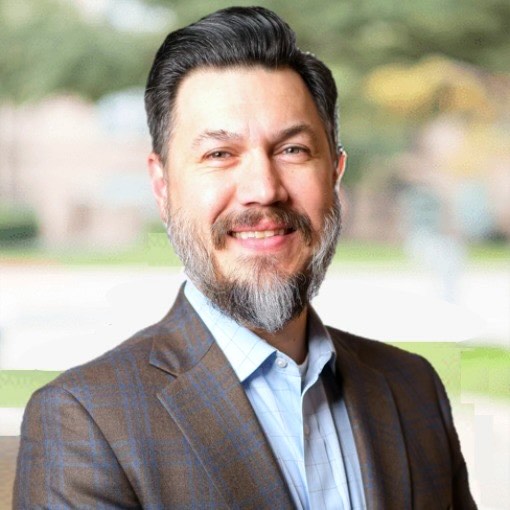
Dan Miller
Director of Customer Service
Dan guides law enforcement agencies across the United States and internationally through every step of the forensic process—from crime scene to courtroom. He ensures investigators have the support and resources they need to navigate advanced DNA testing and maximize the impact of forensic evidence in their cases.