Summary
On August 30, 1988, Iowa Department of Transportation highway workers discovered human skeletal remains on top of a drainage culvert along U.S. Highway 20, approximately one-half mile east of Correctionville, Iowa. Investigators responded to the scene and began an investigation, concluding that the remains had been at the location for many years.
Investigators determined that the remains belonged to an adult man. It was believed that he died sometime between 1971 and 1975. Personal effects found on and around the remains did not provide information that could be used to identify the man.
Despite relentless investigative efforts, the man could not be identified. Details of the case were entered into the National Missing and Unidentified Persons System (NamUs) as UP2619.
In 2025, the Iowa Division of Criminal Investigation, working with the Iowa Office of the State Medical Examiner, submitted skeletal remains to Othram in The Woodlands, Texas.
At Othram, scientists developed a DNA extract from the skeletal remains and used Forensic-Grade Genome Sequencing® to build a comprehensive single nucleotide polymorphism (SNP) profile for the unidentified man. The resulting SNP profile was provided to law enforcement, and the FBI conducted a forensic genetic genealogy search.
The search generated new investigative leads and identified Joan Hewlett of Houston, Texas, as a possible niece of the unidentified man. Information provided by Hewlett and additional genetic testing enabled investigators to positively identify the man as Clarence Ames of Dubuque, Iowa.
Ames was born in 1909 to Frank and Agatha Ames. Census records indicate that he lived with his parents at 2520 Jackson Street in Dubuque through at least 1940. His mother died in 1944, followed by his father in 1945.
By 1950, Ames was renting a room at 278 West 17th Street in Dubuque. A 1954 city directory listed him as living at 1132 Locust Street. This was the last known record located for Ames.
Ames worked in the sash, millwork, and container-manufacturing industries that were prevalent in Dubuque at the time. Ames never married, had no children, and was never reported missing. It remains unknown why he was in Woodbury County at the time of his death. Investigators have not located any known photographs of him.
On October 12, 2026, Ames’ cremated remains were released to Hewlett. She purchased a memorial and arranged for Ames to be buried at his parents’ gravesite in Dubuque. A religious burial ceremony will be held at a later date.
Anyone who knew Clarence Ames or has information about his life is encouraged to contact the Iowa Division of Criminal Investigation or the Woodbury County Sheriff’s Office Investigation Unit.
Othram’s casework costs were paid by NamUs, a national program that assists the criminal justice community with the investigation and resolution of missing, unidentified, and unclaimed persons cases across the United States and its territories. NamUs is funded and administered by the National Institute of Justice (NIJ) and is managed through a contract with Research Triangle Institute International (RTI). Othram is grateful for the support of RTI, NamUs, and the NIJ.
This is the third publicly announced case in the State of Iowa where investigators have used Othram’s technology to identify an individual. Learn about other cases by visiting Othram’s website.
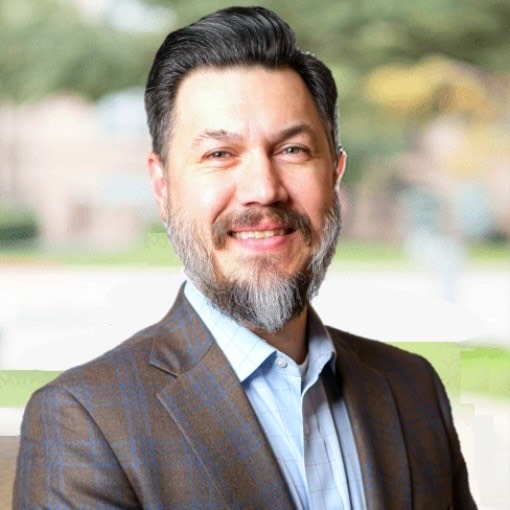
Dan Miller
Director of Customer Service
Dan guides law enforcement agencies across the United States and internationally through every step of the forensic process—from crime scene to courtroom. He ensures investigators have the support and resources they need to navigate advanced DNA testing and maximize the impact of forensic evidence in their cases.