Summary
On April 18, 2003, a 78-year-old woman was sexually assaulted and robbed outside her apartment building near Jane Street and Eglinton Avenue in Toronto, Ontario. The retiree, who used a cane, was returning from Easter shopping at approximately 7 p.m. on Good Friday when a man grabbed her and dragged her to a secluded stairwell. Her attacker stole cash, a watch, and a birthstone ring that had been a gift from her late husband. After the attack, the woman returned to her apartment in the assisted living building and called 911.
The Toronto Police Service began investigating, collecting forensic evidence and canvassing the neighborhood for witnesses. Investigators distributed a composite sketch of the suspect, and Crime Stoppers released a video re-enacting the crime in an effort to generate leads.
At the Centre for Forensic Sciences, forensic scientists examined swabs collected from wet spots on concrete at the crime scene. They developed a male DNA profile suitable for comparison. A crime-scene profile was entered into the national DNA database. Despite extensive investigative efforts, the suspect remained unidentified and the case went unsolved for more than two decades.
The victim, whose identity is protected by a publication ban, died in 2017 at the age of 92. She did not live to see an arrest in her case.
In 2023, investigators with the Toronto Police Service submitted evidence to Othram’s laboratory in The Woodlands, Texas. The evidence arrived in July 2023. At Othram, scientists used Forensic-Grade Genome Sequencing® to build a comprehensive SNP profile from the evidence. The profile was then provided to the Toronto Police Service.
The Toronto Police Service’s in-house forensic genetic genealogy team used the profile to search for genetic relatives of the unknown suspect. Through that search and subsequent genealogical research, investigators identified Barry Cory Ernest as a potential contributor to the crime-scene DNA evidence.
Investigators then pursued additional evidence to confirm the identification. On April 27, 2024, Toronto Police Service investigators conducting surveillance in Niagara-on-the-Lake recovered a coffee cup Ernest had discarded in a park. The cup was submitted to the Centre for Forensic Sciences, where it was processed for DNA. DNA testing linked the profile recovered from the cup to the male DNA profile developed from the original crime-scene evidence.
On June 26, 2024, members of the Toronto Police Service arrested Ernest and took him into custody.
On September 16, 2026, more than 23 years after the attack, Ernest pleaded guilty to sexual assault causing bodily harm and robbery. Sentencing remained pending at the time of the plea.
This is the 30th publicly announced case in Ontario where investigators have used Othram's technology to identify an individual. Learn about other cases by visiting Othram's website.
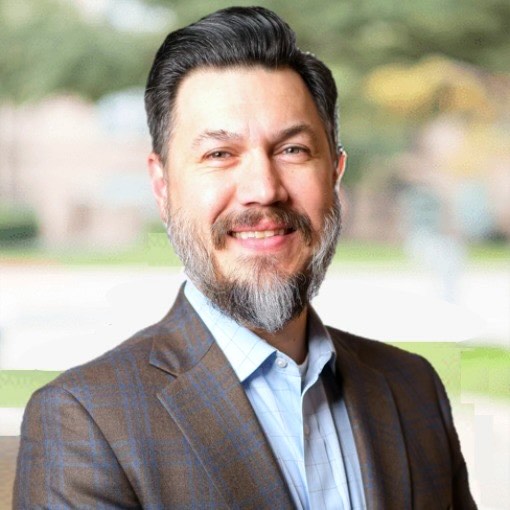
Dan Miller
Director of Customer Service
Dan guides law enforcement agencies across the United States and internationally through every step of the forensic process—from crime scene to courtroom. He ensures investigators have the support and resources they need to navigate advanced DNA testing and maximize the impact of forensic evidence in their cases.